
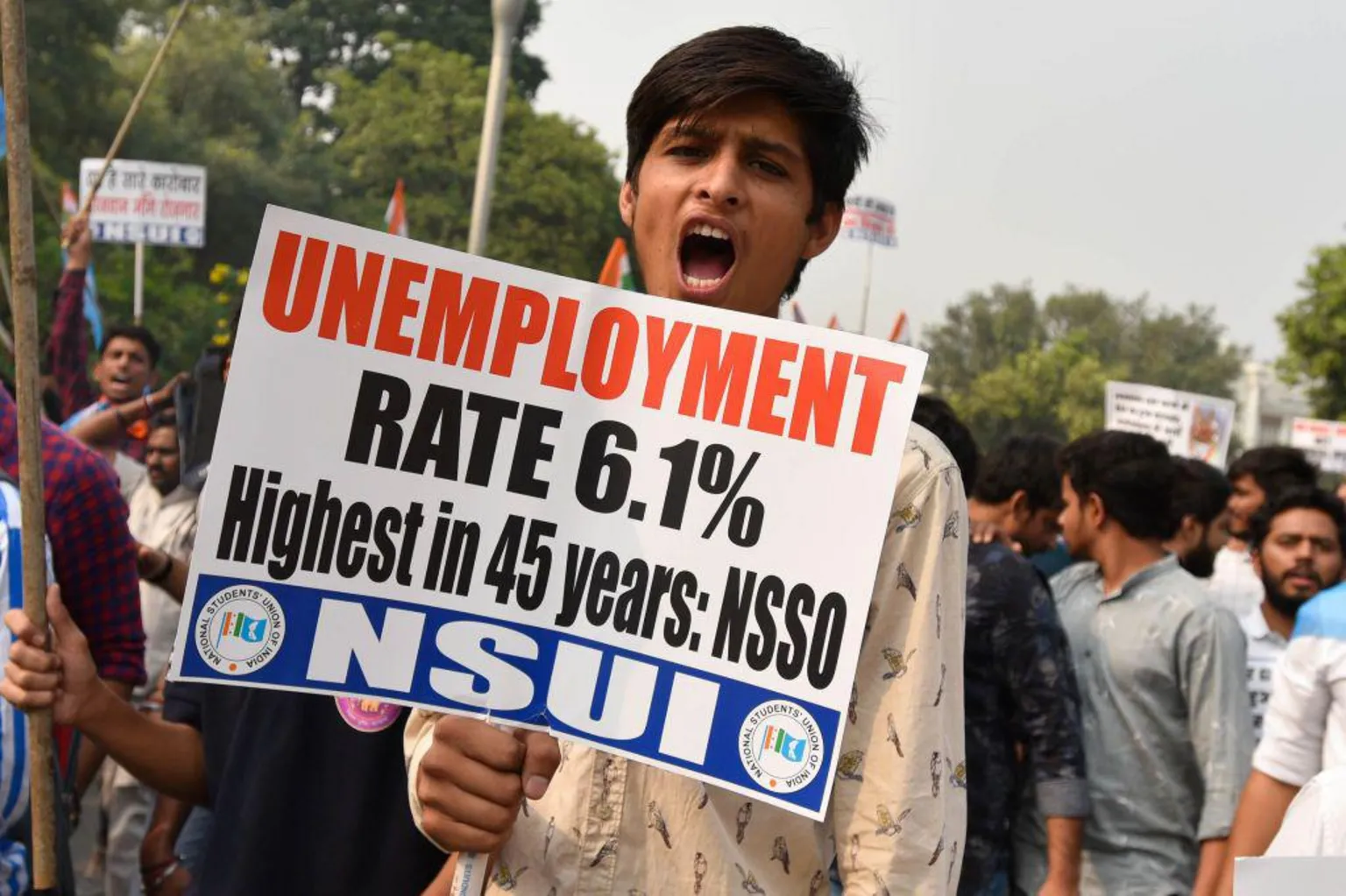
India’s Youth Stand at a Difficult Economic Crossroads
India is often described as a young nation with an old civilisational confidence and a new economic ambition. But behind the language of growth, digital progress and global investment, a quieter anxiety is spreading among millions of young Indians: the fear that education is no longer guaranteeing employment, and employment is no longer guaranteeing dignity.
Moody’s Analytics has projected India’s unemployment rate at 7% in 2026, while inflation is expected to rise to 4.5%. The forecast is not alarming in isolation, but it becomes worrying when seen through the eyes of young jobseekers. A 7% unemployment rate means that even in a growing economy, a significant section of the workforce may remain outside stable employment. At the same time, 4.5% inflation means that household expenses, transport, food, education and rent will continue to eat into limited incomes.
This is the real crisis: India is producing more graduates, diploma holders and skilled aspirants, but the economy is not producing enough quality jobs at the same pace. The result is visible everywhere—long queues for government exams, overcrowded coaching centres, frustrated private-sector employees, gig workers without security, and educated youth accepting work far below their qualifications.
The problem is not merely unemployment; it is underemployment. A young person may technically have work, but the salary may be too low, the job may be temporary, or the skill used may have little connection with the degree earned. This creates a deep psychological and social gap. Families invest heavily in education, often through loans or sacrifice, expecting upward mobility. But when the return is poor, disappointment turns into anger.
Inflation worsens this situation. When prices rise, the first pressure falls on lower and middle-income families. A young employee earning a modest salary finds that rent, food, transport and digital expenses consume most of the income. Saving becomes difficult, marriage is delayed, family responsibilities increase, and dreams of buying a home or starting a business move further away. For unemployed youth, inflation is even more painful because dependence on parents becomes longer.
India’s growth story still has strength. Infrastructure spending, services exports, digital platforms and domestic demand continue to create opportunities. Some financial institutions have projected India’s growth around 6% to 6.7% for 2026-27, showing that the economy is not stagnant. But growth without sufficient employment can deepen inequality.
The youth question, therefore, must become central to economic policy. India needs not only more jobs, but better jobs. Manufacturing must expand beyond slogans. Small and medium enterprises need cheaper credit, simpler compliance and easier market access. Skill development must be linked to real industry demand, not just certificate distribution. Urban planning must also support employment by improving transport, affordable housing and workspaces.
Government recruitment delays should be reduced, because for millions of aspirants, delayed exams and postponed results mean lost years. Private-sector employment must also become more secure and transparent. The gig economy needs regulation that protects workers without killing innovation.
India’s demographic dividend is not automatic. A young population becomes an asset only when it is educated, skilled, healthy and productively employed. Otherwise, the same dividend can turn into social pressure.
The message from the Moody’s forecast is clear: India cannot celebrate growth numbers while ignoring job anxiety and household inflation. The question before the nation is no longer only how fast the economy grows, but who benefits from that growth.
For India’s youth, the coming years will be decisive. Their degrees have increased, their ambitions have expanded, but opportunities must now catch up. Otherwise, the distance between aspiration and reality may become one of India’s biggest economic and social challenges.